The scale of this shift is significant. According to the U.S. Census Bureau, U.S. retail ecommerce sales reached an estimated $340.2 billion in Q2 2026, accounting for 17.1% of total retail sales. Additionally, Ecommerce sales also grew 12.2% year over year during the quarter.
For growing retail and ecommerce businesses, this creates a practical challenge of selling more products when fulfillment capacity is limited.
That is where ecommerce order fulfillment services become strategically important. The right fulfillment model can connect inventory, order processing, warehousing, transportation, delivery, and returns into one coordinated operation, helping retailers scale without allowing logistics complexity to become a barrier to growth.
What Store Fulfillment Services Actually Cover
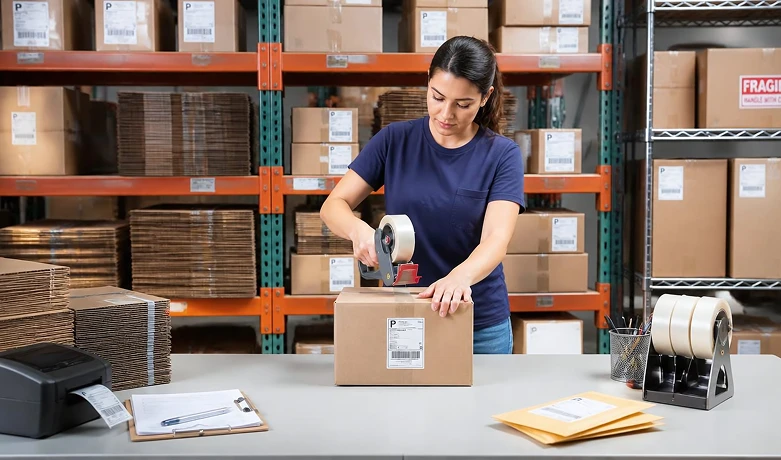
Store fulfillment services cover everything that moves product from your inventory to a retailer’s shelf or a customer’s door. That includes receiving and inspection, storage, pick-and-pack, retailer-specific labeling, palletizing, replenishment shipments to store locations, and the order flow that sits between channels, such as ship-from-store and in-store pickup support.
Two disciplines sit under that umbrella:
- Retail fulfillment services handle bulk, scheduled, compliance-heavy shipments to stores and distribution centers.
- Ecommerce fulfillment services handle small, fast, individually addressed parcels.
Most growing businesses need both, often from the same inventory pool. However, the failure modes differ. A store shipment fails when a carton label doesn’t match the retailer’s routing guide or pallets are built the wrong way. A parcel fails when it ships late, arrives damaged, or leaves the building with the wrong SKU. Fulfillment services built around only one model tend to struggle when the other shows up.
Why Growth Exposes Fulfillment Gaps
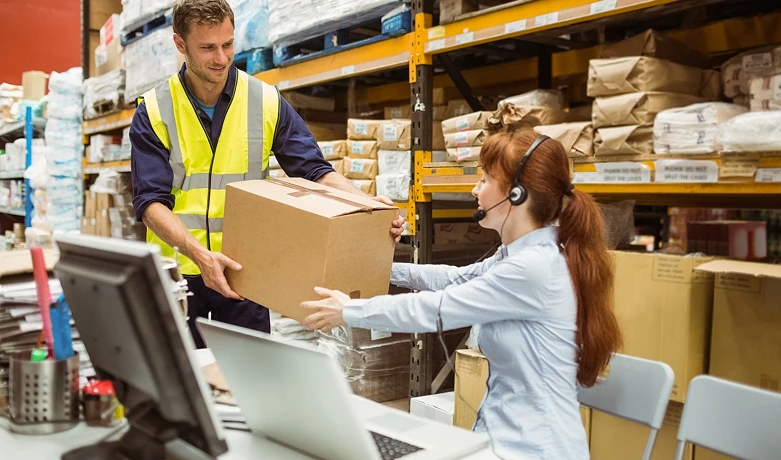
Operations teams often hit the same wall. A brand wins its first regional retail account while its online store is gaining traction. Suddenly one stockroom, one spreadsheet, and one shipping station are serving two very different customers.
Three problems tend to surface first:
1. Inventory conflicts
Units promised to a retailer’s purchase order are the same units a shopper just added to a cart. Without a single view of stock, brands oversell online or short-ship a store.
2. Compliance penalties
Large retailers publish detailed vendor requirements covering labels, packaging, appointment windows, and advance ship notices. Missing them can mean chargebacks, which quietly erode the margin that growth was supposed to create.
Peak-season strain
Seasonal spikes hit retail replenishment and online orders at once. Temporary fixes rarely hold up when both channels peak together.
None of these are signs of a weak team. They are signs that the operation has outgrown a model built for one channel and low volume.
Retail Order Fulfillment vs. Ecommerce Order Fulfillment
| Parameter | Retail Order Fulfillment | Ecommerce Order Fulfillment |
| Order profile | Large, scheduled, few orders | Small, continuous, many orders |
| Key risks | Compliance chargebacks, missed delivery windows | Late delivery, mis-picks, damage |
| Transportation | ||
| Success metric | On-time, in-full delivery to the retailer | Order accuracy and delivery speed |
The most useful point for growing brands is that these are two workflows, not one product. A provider that treats them as interchangeable will likely excel at one and tolerate the other. The right setup lets you hold inventory once and route it to whichever channel needs it.
Returns: The Fulfillment Cost Nobody Budgets For
Returns are where fulfillment strategy gets tested. The current market trend suggests that brands should stop treating returns as a customer-service problem and start treating them as an inventory problem. Every returned unit is stock that is unavailable until someone inspects, grades, restocks, or liquidates it. A slow reverse flow means a sellable product sits in limbo while you reorder the same item. Brands that tie returns processing into the same fulfillment network as outbound orders tend to recover sellable stock faster and see cleaner data behind a product return.
When 3PL Fulfillment Services Make Sense
Outsourcing is not an admission that a team can’t cope. It is often the point where a business decides where to spend its attention. In the National Retail Federation’s (NRF) returns survey, 49% of retailers said they planned to lean more on third-party logistics partners to manage holiday returns and fraud.
3PL fulfillment services usually make sense when:
- Order volume swings enough that fixed warehouse space and headcount are either idle or overwhelmed.
- You are adding retail accounts and need compliance expertise you don’t have in-house.
- Shipping across regions is pushing up delivery times and transportation costs.
- Leadership time is going to packing tables instead of product, marketing, and customer relationships.
Fulfillment services for growing ecommerce businesses are most valuable at this stage because the cost of switching is lowest before processes harden around workarounds.
What to Look for in a Retail Fulfillment Service Partner
- Retail compliance experience. Can they show how they handle routing guides, labeling, and advance ship notices?
- Transportation depth. Fulfillment doesn’t end at the dock. A partner with freight forwarding and domestic transportation capability can control more of the journey.
- Handling standards for high-value goods. Furniture, fitness equipment, electronics, and medical products need more than standard pick-and-pack.
- Inventory visibility. You should see stock levels, order status, and exceptions without chasing emails.
- Scalability across peaks. Ask how they staff and plan for Q4, not just a typical month.
- Return handling. Confirm how returned goods are inspected, graded, and restocked.

Building a Fulfillment Setup That Grows with You
If you are weighing that next step, look for a U.S.-based logistics partner with freight forwarding depth, global reach, and a white-glove standard of care. Retail order fulfillment services built around that expertise put experienced teams on retail, ecommerce, and specialty freight, with care at every handoff. When your shipments carry your brand’s reputation, a trusted logistics partner is a strategic choice, not just a vendor line item.